
Nuclear Criticality Experimental Research and Development
NCERD Ltd will restore sovereign UK capability to undertake nuclear criticality experiments in a dedicated Nuclear Criticality Research and Development (NCERD) facility. Such a facility is a specialist research installation that brings fissile material into a carefully controlled configuration so that a short-lived fission chain reaction can be observed and measured. Unlike a nuclear power reactor, which is designed to sustain fission to generate electricity, NCERD would produce brief, tightly controlled pulses for experimental purposes only. This would provide the UK with a rare strategic capability to generate high-value experimental data.
These experimental data can be used to:
Verify and validate nuclear computer codes and data libraries.
Test equipment and components to significant radiation fields.
Academic research.
Hands-on nuclear criticality safety training.
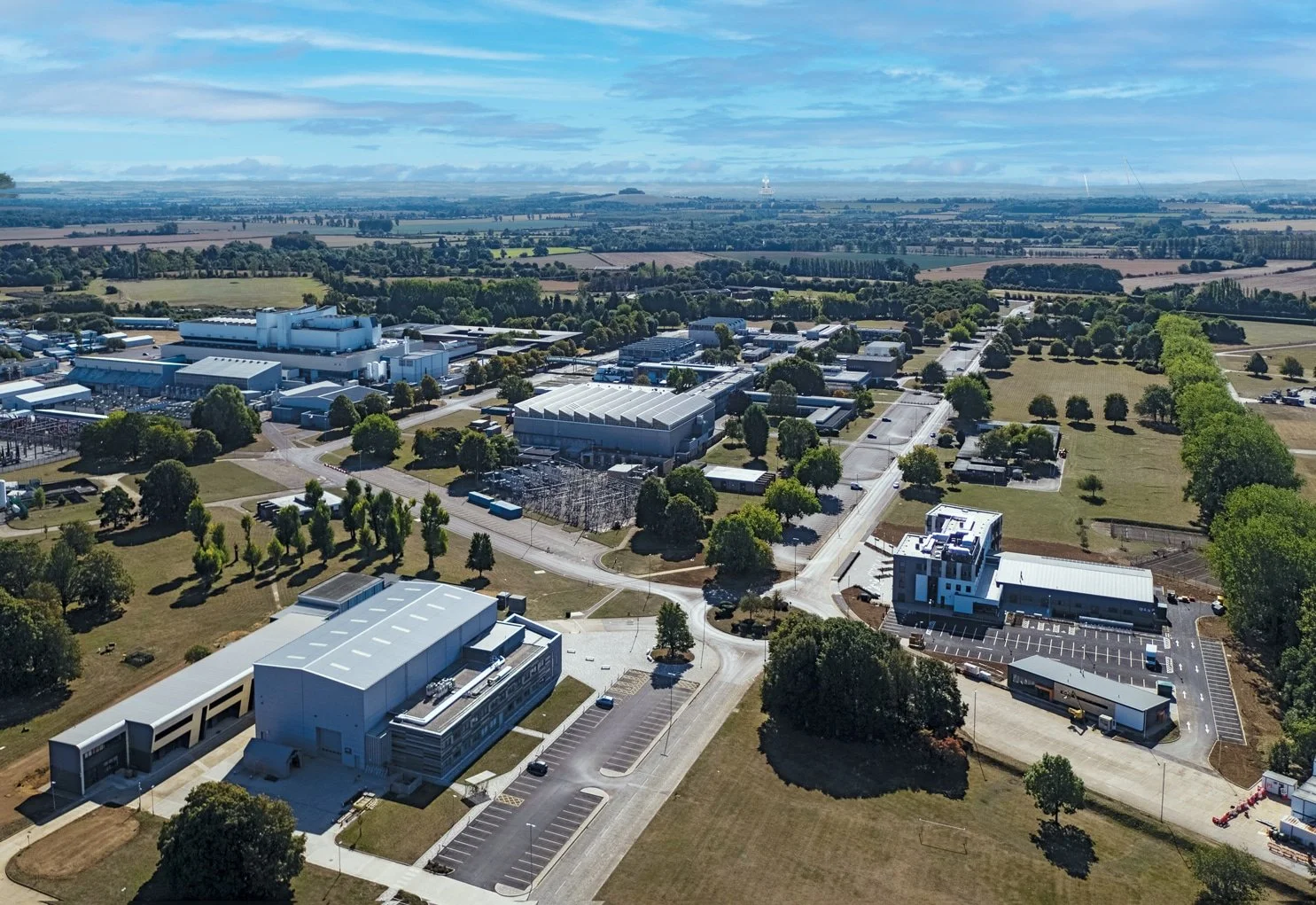
NCERD Ltd intend to accomplish this through the use of existing inventories of nuclear material in addition to repurposing existing facilities earmarked for decommissioning.
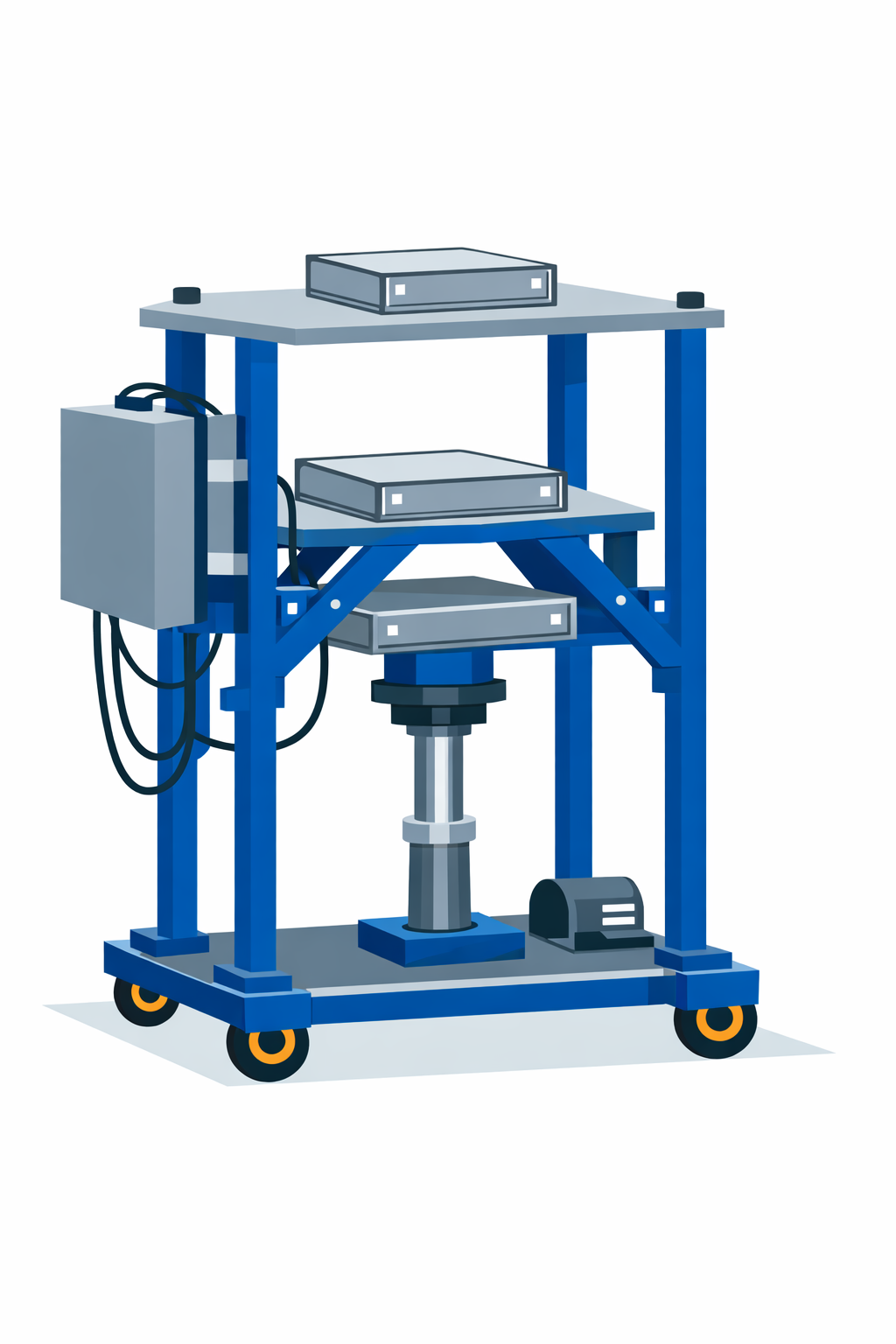
Impression of ICARUS (influenced by ATLAS experiment)
Technology and Experimental Apparatus
ICARUS Critical Assembly
NCERD Ltd proposes to use a mature, well‑understood technology based upon existing international critical assemblies. The initial proposed experimental arrangement, the Integrated Critical Assembly Remote User System (ICARUS), is a remotely operated vertical assembly using uranium plates in a polythene‑moderated cuboid geometry that users remotely assemble to form a critical configuration, prompting a fission chain reaction and generating a pulse of radiation. Various materials can be integrated with the system such that nuclear data libraries and computer codes can be validated and verified against ICARUS, the pulse can be used to subject equipment and components to significant gamma and neutron radiation, and operation of ICARUS can be used as hands-on training to relevant nuclear personnel.
Fuel Cycle and Waste
A single batch of uranium, in metallic laminated plate form with polythene coating, is expected to support the lifetime of the facility. Criticality is achieved only for micro‑seconds over the facility’s life, so there is no meaningful burn‑up and only trivial quantities of fission products and activated material.
No spent fuel is generated, and waste arisings are expected to be limited to very low level waste (VLLW), with no high‑level (HLW), intermediate‑level (ILW) or likely low‑level waste (LLW) streams.
Safety Fundamentals
The facility will be designed to meet recognised good practice for critical experiment facilities, including:
- Remote insertion of reactivity
- Engineered exclusion of personnel while reactivity is inserted
- At least two independent neutron or gamma detectors with audible/visual indication of multiplication
- Two independent safety measures capable of scramming the assembly, independent of the control system
These requirements will be met using proven nuclear industry technologies such as key interlocks and neutron/gamma detectors, underpinned by a robust safety case and nuclear governance framework.
Ready to solve tomorrows challenges Today?
Share your details below and our team will connect to advance nuclear science together.